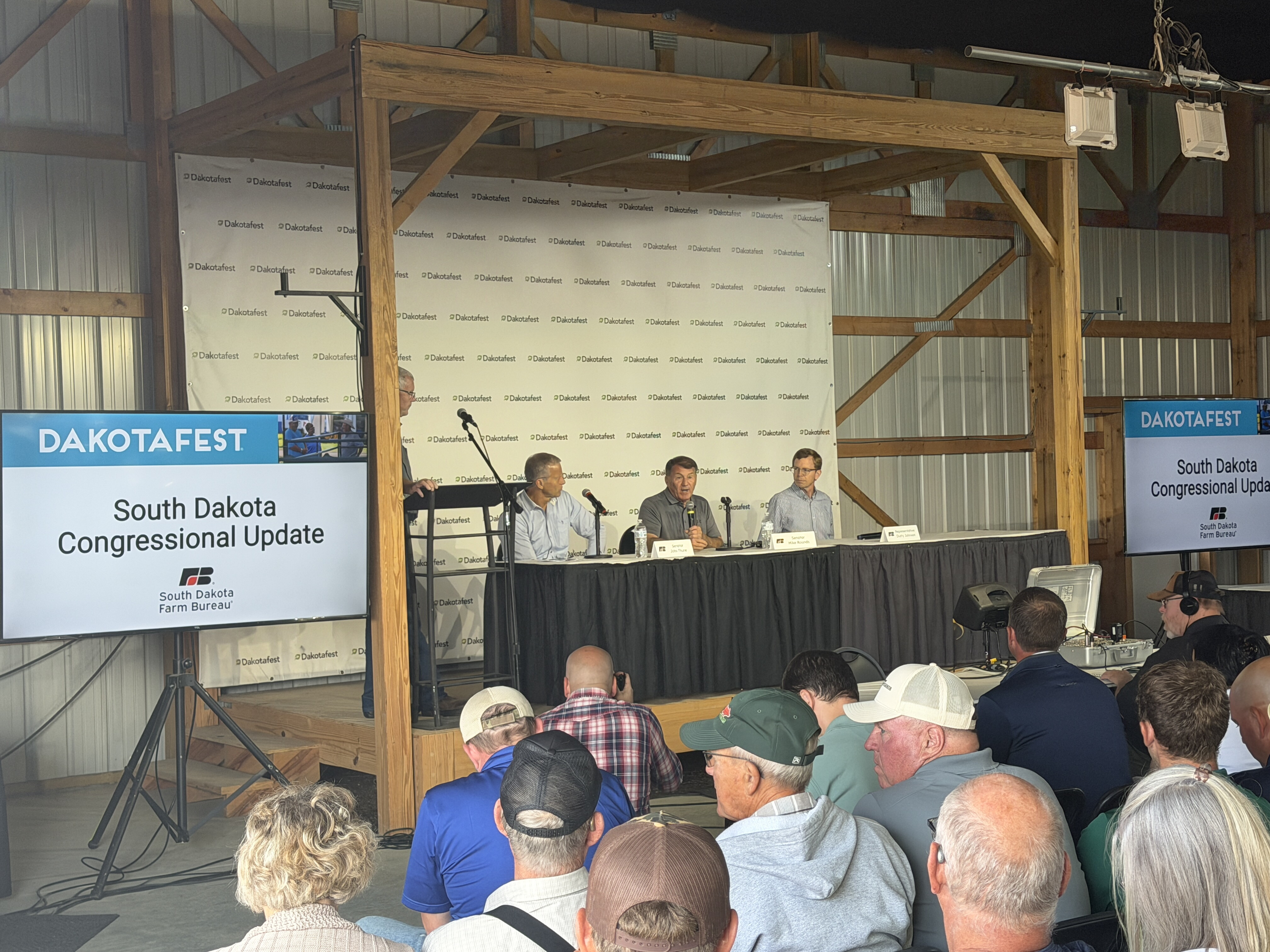
Sen. John Thune, Sen. Mike Rounds and Rep. Dusty Johnson speak on a panel at Dakotafest on Aug. 19 in Mitchell, South Dakota.
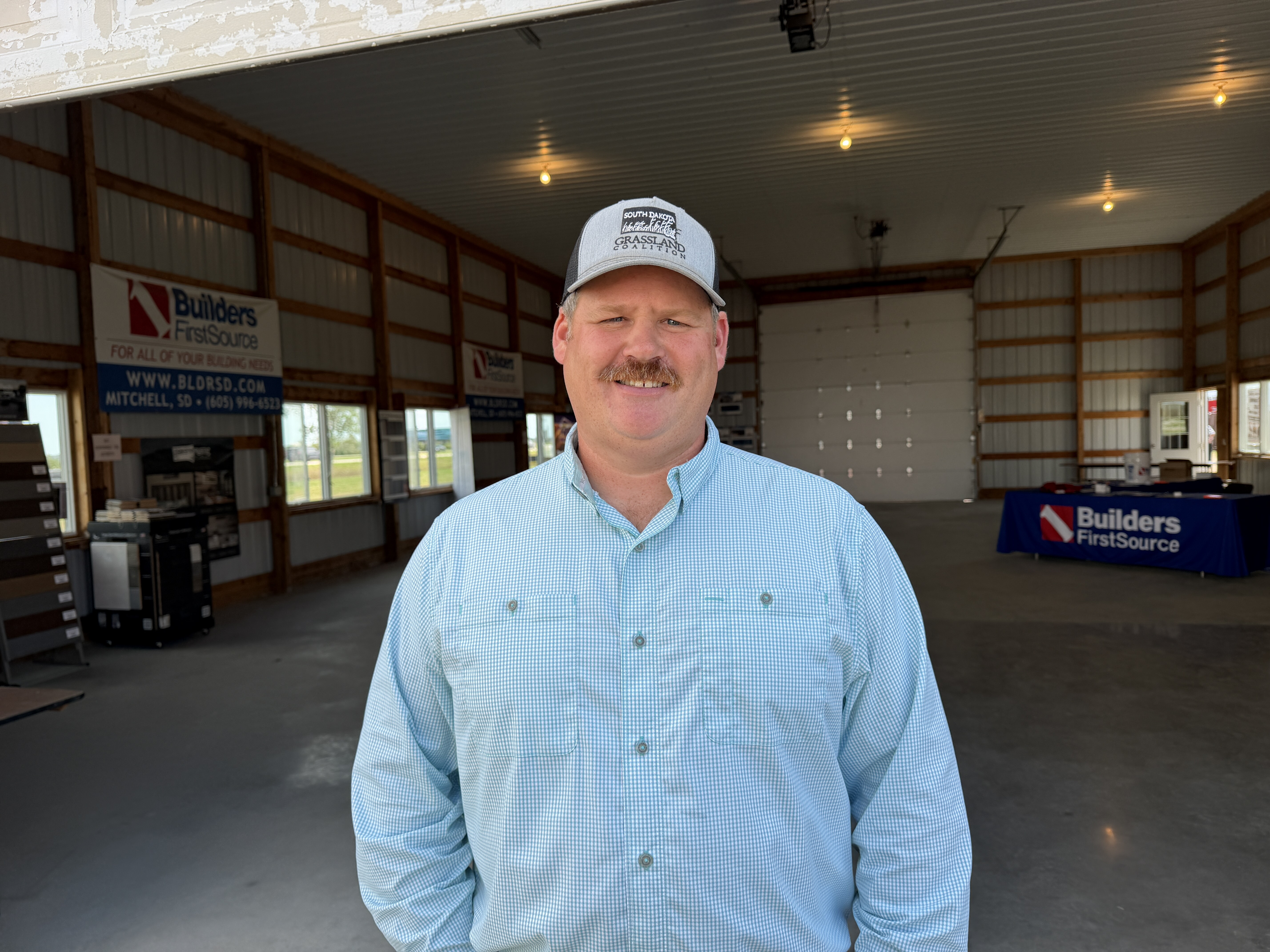
Munger


MITCHELL, S.D. — A bipartisan effort in the U.S. Senate would put less productive cropland into grass in an effort to rebuild the nation’s cattle herd.
Sens. Mike Rounds, R-S.D., and Amy Klobuchar, D-Minn, introduced the Rebuilding America’s National Cow Herd — or RANCH — Act on Aug. 19. This legislation would create a new voluntary grazing land restoration program, opening up to 20 million new acres for grazing. Rounds spoke about the legislation will at the second day of Dakotafest in Mitchell on Wednesday.
“The idea behind it is to take some of that less productive land that’s currently in ag production for commodity products — corn, soybeans, milo and so forth — and put it back into grass because it’s not that productive,” Rounds said. “What we had offered is for up to 20 million acres to pay about 75% of what the current county average rental rate is for that type of land when it’s in commodity production, pay about 75% and then pull that back out and put it back into grass. We’ll help participate in putting it back into grass, make the contracts for between 10 to 15 years and then during that time, they can actually graze the land.”
This legislation would help with rebuilding the lower cattle herd numbers. While U.S. cattle numbers remain historically low, the latest USDA cattle inventory report showed an increased cattle inventory for the first time since 2018. However, the 2026 calf crop is expected to be 32.5 million, down 2% from last year, leading to continuing concerns about how long it might take to bring numbers back up. The January cattle inventory report showed Minnesota’s beef cows and heifers that have calved were up 4%, North Dakota up 2% and South Dakota up 1%. Beef cow replacements were nearly flat across all three states in that report.
Shrinking grasslands — from development, drought and ecological problems like woody encroachment — make it harder for cattle producers to add on to their herds.
“What we’re finding right now is that without grass, you literally can’t have cows. And what we’ve found is that so much of that ag land out there that was just at the point of maybe being productive enough to break up, they were breaking up. But, that’s also the land that we’re paying the higher payouts on during times of drought or anything else because it’s not that good of land to begin with, but it will grow good grass,” Rounds said. “So let’s take a common sense approach on this, provide an incentive and take some of that land that’s out there and put it back into grass production and grazing.”
AJ Munger is a rancher in Highmore, South Dakota, running a diversified cow-calf and farming operation. He said he thinks the RANCH Act will help the next generation of producers.
“It allows us access to grasslands that right now are in very short supply, you know. We’re losing up to 2 million acres a year, and you can see what that’s done to the cowherd,” Munger said. “We have the best cowherd in the world and we’re the country that gave the world the cowboy, and now we’re having to rely on other countries to supply us with beef. So, I think it’s perfect timing to invest in our lead and really prioritize domestic beef production.”
“For young producers coming in, this is one more opportunity for them to maybe have a chance to find some grass to start that foundation herd on,” Rounds said.
Forage availability is something that plays a large role in decision making for producers like Munger. The RANCH Act will help provide more forage, especially in drought years.
“We make a lot of our management decisions based on how much forage we have access to, and grazing has become especially short in supply. So, that is one of the first things we take into account when we make management decisions on the ranch,” Munger said.
The RANCH Act will benefit more than just cattle ranchers. For crop producers, it provides an option for additional income.
“Because, for the good land, they’re probably not going to put it in because they’re only going to be paid about 75% of the going rental rate would be, but for that land that maybe isn’t making that good of commodity production on it, they’ll look at this and say ‘You know what? It wouldn’t be a bad idea if I could get paid 75% and then turn around and graze it and receive, you know, a revenue for the grazing of that land as well,’” Rounds said.
It will also help bring down the price of beef by producing more cattle domestically.
“One way to make that easier or to make that happen is to reduce the price of actually getting grass, and that means more grass out there available for someone to rent,” Rounds said.
This is different from the Conservation Reserve Program.
“Conservation Reserve is a great program. I believe in it. But it’s not designed to actually be grazed. It’s designed to take it out of production. In this particular case, we’re actually changing it from a questionable production into a very high quality production of grassland that can actually help us rebuild our cow herds,” Rounds said.
The effort also is different than a plan the U.S. Department of Agriculture put out in October 2025 aimed at increasing the U.S. cattle herd. That plan used a three-prong approach focused on protecting and improving the business of ranching, expanding processing, consumer transparency and markets for ranchers, and building demand alongside domestic supply.
Rebuilding the cattle numbers is going to take time.
“This is going to take, you know, quite a few years, but you’ve got to start sometime,” Munger said. “I mean, the best time to grow the cowherd was 10 years ago, but the next best time is today.”